Nile River Cruise: 9 Tips to Perfectly Cruise the Nile in Egypt

Nile River cruises put you in the heart of ancient Egypt, just steps away from some of the most historic sites in the world. When cruising the Nile, you'll visit colorful bazaars, wander through ancient temples and learn about Egyptian deities, burial practices and culture.
If you're considering taking a river cruise on the Nile, properly prepare for your trip by checking out the following nine Nile cruise tips.
1. Cruising the Nile River 101
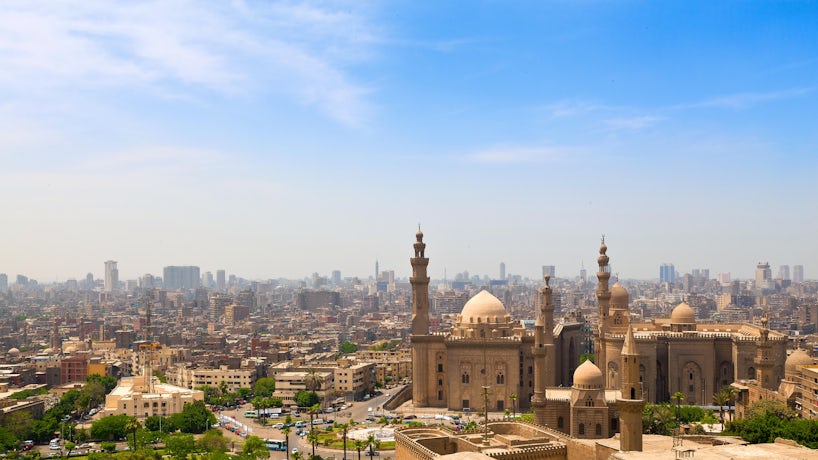
When taking a Nile River cruise, you can either make your way south or north. If you're interested in the southbound option, you'll likely start your Nile river cruise in Cairo -- and for good reason.
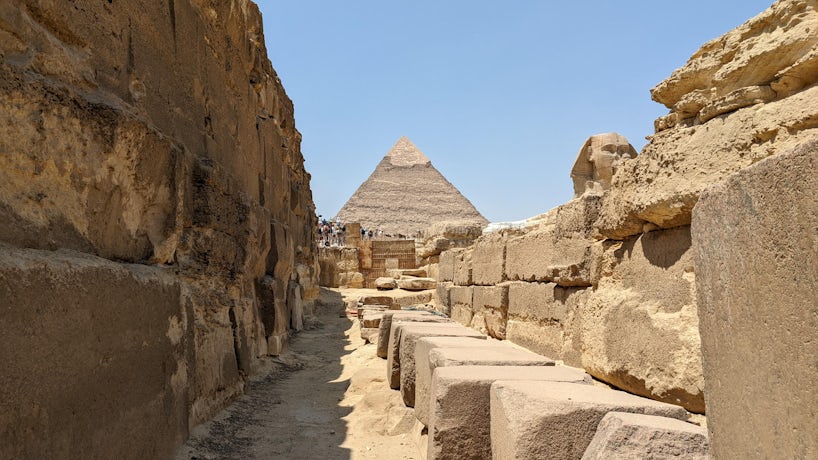
Cairo is a bustling, vibrant city that's unlike anything many of us have experienced. Cairo is also home to the Great Pyramids and the Sphinx, though both require a bit of a journey from the city center.
Most Nile River cruise lines offer itineraries that bring guests in a day or three ahead of their cruise. Daily excursions will be offered to the best sites. The acclaimed Sphinx and the Pyramids are not to be missed.
Also located on the Giza Plateau is the Grand Egyptian Museum. This museum houses hundreds of thousands of antiquities, including those found in the tomb of the boy king, King Tut. You could spend days here, though most cruise excursions only stop here for a few hours.
From Cairo, you'll fly, usually by chartered plane, to Luxor, where you will join your cruise ship. Luxor is a magical port that's home to the famous Valley of the Kings. In some cases, you'll spend a couple days in Luxor to explore, either before or after your sailing.
While you can start your Nile cruise from Cairo, you also have the choice to make the journey in the opposite direction and travel northward. There are Nile River cruises from Aswan as well, typically making the same stops as those that start in Cairo or Luxor (depending on the specific itinerary and length).
Aswan is a historical city that holds ancient ruins, such as the Temple of Philae, a ruins complex located on Agilkia Island that was built in 280 BCE. The city offers other enticing excursions, like the Nubian Museum, which showcases the impressive history of Nubia (the area along the Nile between Aswan and Khartoum in Sudan).
Check out our Nile River Cruise map for a more detailed look at the options you have for a cruise on the Nile.
2. Nile River Cruise Itineraries: Short and Long Cruises for Every Style
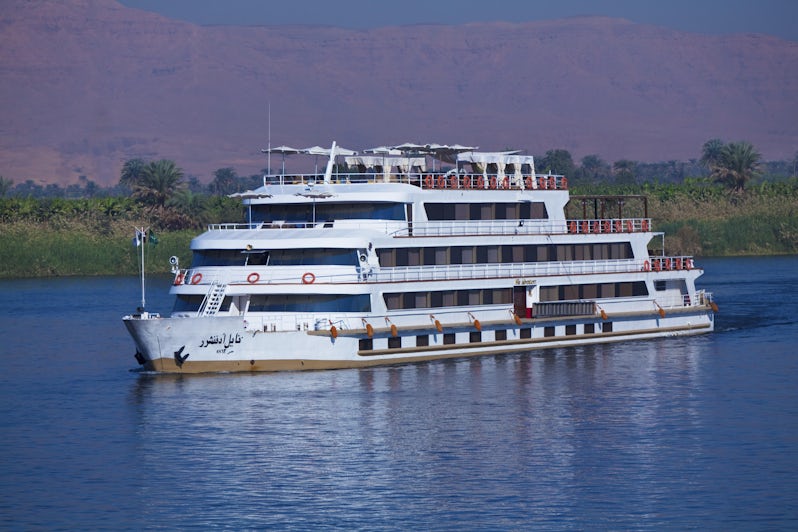
There is a Nile River cruise itinerary for every cruiser. However, the pace can be difficult, as some places are best viewed in the morning or at night, while others are perfect for the middle of the day. Ships often stop at two ports or more in a day.
3-Night Nile River Cruises: This shorter option usually departs from Aswan and sails to Luxor or vice versa.
You might visit the High Dam, the Unfinished Obelisk and the Temple of Philae in Aswan, Kom Ombo, Edfu and Esna. In Luxor, you'll see the Valley of the Kings, the Valley of the Queens and the Temple of Queen Hatshepsut.
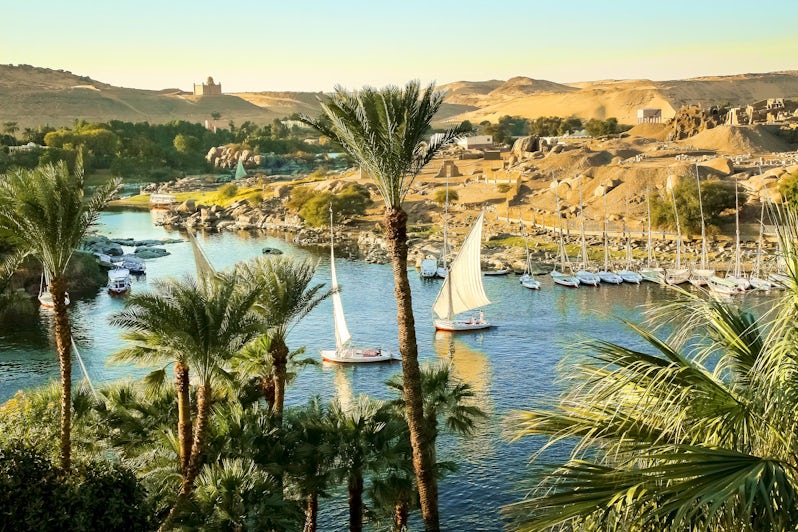
4-Night Nile River Cruises: A four-night option leaves from Luxor and sails to Aswan or vice versa. You probably will see all of the above along with Luxor and Karnak temples, take a felucca (a traditional Egyptian sailboat) ride to the Botanical Island or a Nubian village, and see Elephantine Island and the Tombs of the Nobles.
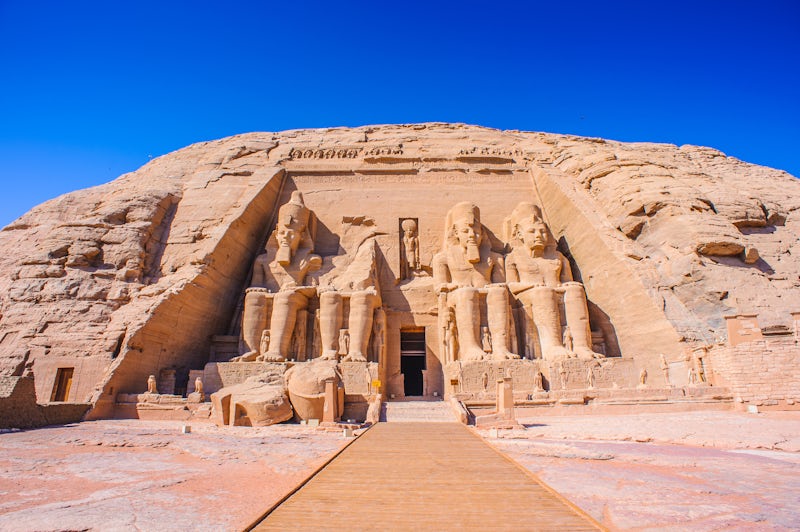
For those who would like to extend their stay to see Abu Simbel Temple Complex, this is the cruise for you.
7-Night Nile River Cruises: Seven-night Nile River cruises from Aswan to Luxor or vice versa are also available. These itineraries include all of the above, but are divided over a week for a more relaxing trip.
Longer Nile River Cruise Vacations: Many of the big-name cruise lines offer longer journeys that generally include time in Cairo pre- and post-cruise. The cruise itself will be a round-trip sailing from Luxor or from Luxor to Aswan and will be similar to the seven-day options.
The payoff with these longer Nile River cruises is the extra time spent in Cairo, where you'll see the Giza Pyramids, the Sphinx and the impressive Grand Egyptian Museum.
3. Nile River Cruise Destinations: Vibrant Ports and Historic Sights Abound
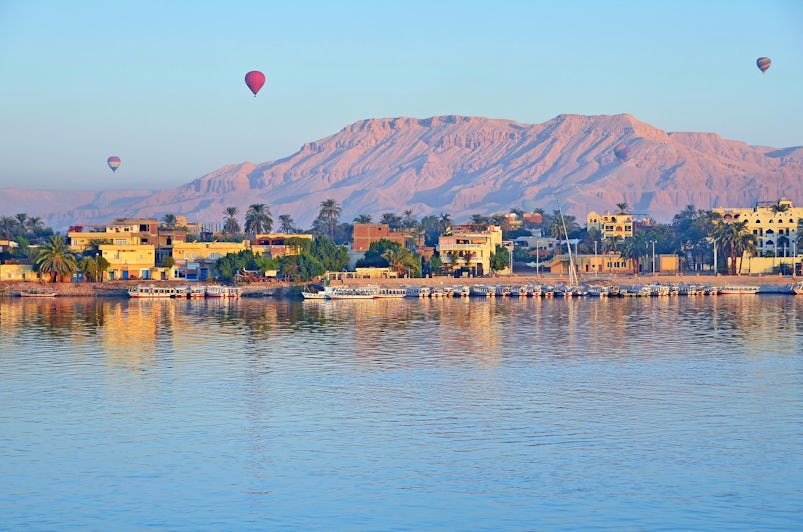
When you're cruising the Nile, you have the unique opportunity to witness and explore historical locations with ease. Here are some of the highlights you could see while on any of the above cruises on the Nile River.
Valley of the Kings: The tombs at the Valley of the Kings were constructed at some point during Egypt's New Kingdom period (1570 to 1069 BCE) and are still impressive even after all the finery was stolen by opportunistic gravediggers over the centuries.
The standard admission ticket includes three of 63 tombs. Ask your guide for recommendations of the best ones to see.
You can also pay extra to visit Tutankhamen's tomb. Although the treasures buried with King Tut are displayed at the Grand Egyptian Museum in Cairo, the tomb provides a glimpse of what is left of Egypt's most famous icon, the teenage king whose death remains a mystery.
Inside, there is a sarcophagus, painted walls showing his sisters and 11 baboons and King Tut's mummy.
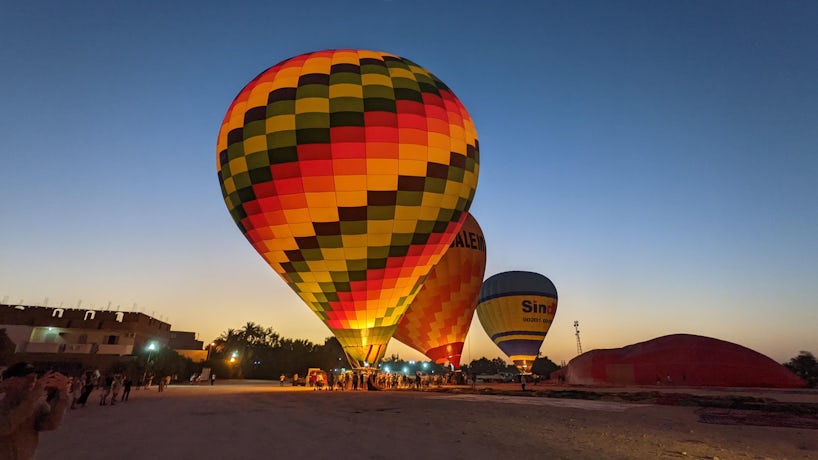
Many cruise lines offer a morning hot-air balloon excursion over the Valley of the Kings. If you have a chance to try this, take it. It's an incredible voyage that shows the vastness of the Valley, the several cites still being unearthed and the contrast between the green banks of the Nile and the dry Sahara.
Temple of Karnak: This is the second-largest temple in the world (second only to Angkor Wat in Cambodia). The Temple of Karnak took 1,000 years to be built. When visiting this 200-acre temple, you can easily see the one-upmanship between a succession of pharaohs as you wander through it.
Look out for the statue of one of sun God Amun-Re's incarnations -- a scarab beetle -- which symbolizes eternal life. Supposedly, if you walk around this sculpture three times, you're granted health, wealth and many children. But, if you walk around it five times, you'll get good luck and avoid envy.
Temple of Philae: Built to honor the goddess of motherhood and fertility, Isis, this was the last ancient temple built in the classical Egyptian architectural style. Construction began in approximately 280 BCE. The temple was moved from its original location on Philae Island to its new location on Agilkia Island after the flooding of Lake Nasser.
Don't miss the spectacular Sound and Light show at night here. Note the repurposing of the temple as a Christian church as well, with crosses carved into the older hieroglyph reliefs and images of the Egyptian gods carefully defaced. You'll also spot graffiti dating from the 1800s.
Luxor Temple: Above the upper part of Luxor Temple is a sacred mosque, built before the sand was swept away. On the outer walls you can faintly make out a painting of the last supper among the hieroglyphics, from a time when Christians were banned by the Romans from building churches.
Temple of Edfu: Dedicated to Horus, the falcon god of protection, Edfu is a Ptolemaic temple built in classic pharaonic style (237 to 57 B.C.) and is one of the best-preserved temples in Egypt.
Start with the first pylon with its two magnificent falcons. Then, admire the carvings inside that illustrate the Festival of the Beautiful Meeting, in which the statue of Horus joined the statue of Hathor at her temple in Dendera.
Kom Ombo: Dedicated to the gods Sobek (the crocodile god) and Haroeris (the winged god of medicine and one of the oldest incarnations of Horus), the Temple of Kom Ombo is known for its wall reliefs, which show ancient surgical and dental tools. You can also see ancient mummified crocodiles in The Crocodile Museum.
4. Nile River Cruise Lines: Major Lines and Local Players Are Both Options
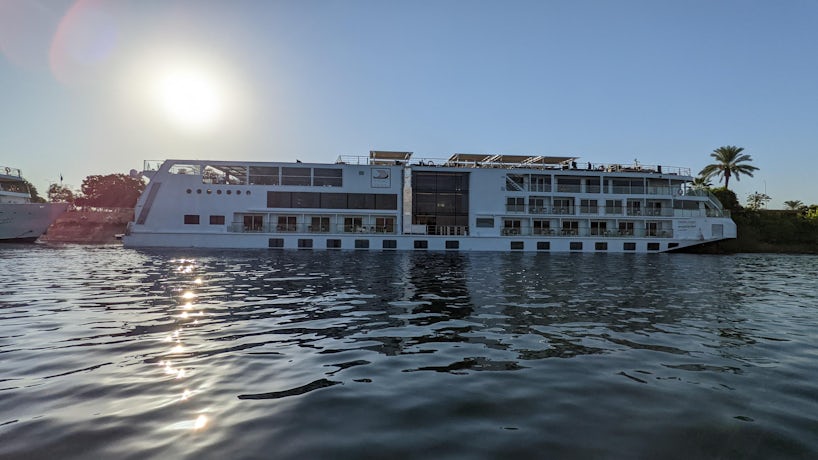
Nile River cruise lines appeal to a wide range of passengers. A number of cruise lines sail the Nile River, from bigger companies who sail around the world to smaller companies that specialize in only Egypt.
Cruise lines sailing the Nile River include Viking, Avalon Waterways, Abercrombie & Kent, Sanctuary Retreats, AmaWaterways, Movenpick, eWaterways, Uniworld, Sonesta Nile Cruises, Nile Exploration, Oberoi and Travcoa.
Luxury Nile River cruises have become a big part of the experience. The top luxury Nile River cruises are Uniworld, Viking, Sanctuary Retreats and Abercrombie & Kent.
Some ocean cruise lines, such as P&O Cruises, MSC Cruises and Silversea offer day trips to Luxor and Aswan when their ships dock in Safaga on the coast of the Red Sea. It's an alternative way to visit some of the famous temples while seeing more than just the Nile.
5. Nile River Cruise Packing: What to Bring on Your Adventure
What to Wear on a Nile Cruise: Women
More than 90% of the citizens of Egypt are Muslims. Most local women wear modest dress, including head covers. Long-sleeved tops and ankle-length skirts are the norm for Egyptian women.
That being said, visitors to the area aren't expected to dress in the same fashion. Still, shorts and tank tops may draw looks among more conservative Egyptians.
However, you should still pack less revealing clothing to show respect, especially in religious areas that require such wear. Note that mosques require everyone to have their legs and arms covered.
A wardrobe of loose capris or trousers and blouses will make you feel more comfortable. We're big fans of linen, which is breathable even in the heat and wears well. Stick with light colors (whites and pastels), as dark colors will simply absorb the heat.
Bring along a floppy hat, sunglasses and a scarf, all of which can assist in protecting you from the sun and heat. You'll definitely need reliable walking shoes as well.
Many cruises offer an Egyptian night, where guests are encouraged to wear a jalabiya, which is a traditional Egyptian gown. These can be purchased in ports for less than $15 or $20.
Onboard your ship, sleeveless tops or dresses and shorter skirts are acceptable.
What to Wear on a Nile Cruise: Men
For men, anything goes when it comes to dress code. Still, you will probably stand out if you wear shorts, as most Egyptians wear trousers or jalabiya.
A good sun hat, great walking shoes and sunglasses are encouraged as well. For Egyptian night, men also will wear jalabiya, which can be purchased in port.
What Else to Pack for a Nile River Cruise
Be aware that Egypt has a hot climate no matter the time of year, so staying hydrated is a must. It's likely that your cruise line will provide ample bottled water for you, so you probably won't need a reusable water bottle.
Keep in mind that tap water in Egypt has been known to upset travelers' stomachs. In fact, you'll likely be brushing your teeth with bottled water. You should also avoid raw vegetables and swimming in the Nile or its canals because of the risk of exposure to bacterial and other infections. Be sure to always peel fruits before eating them.
Anti-diarrheal medication and antacids can really come in handy in case any issues should arise, so you should pack these along as a precaution.
You will need a good bug spray, as flying pests -- mosquitoes and flies in particular -- are ever-present. Don't forget your sunscreen as well.
6. Nile River Cruise Weather: Aim for Shoulder Season or Winter Months
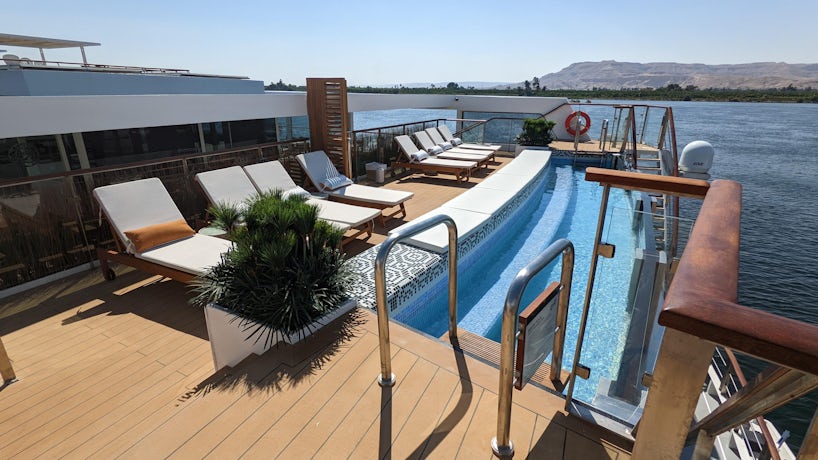
Since the Aswan High Dam opened in 1971, the Nile River depth has been regulated, depending on the needs of navigation and irrigation. It generally doesn't face the same high- or low-water issues that sometimes affect Europe's rivers. So even in the hottest weather, you'll have smooth sailing.
Egypt river cruises on the Nile mostly run from August through May, pausing for the extreme heat of summer. The best time to cruise the Nile River is October to April in terms of weather. However, be prepared to experience crowds during this time because it's the busiest season.
These shoulder seasons, which are spring and fall, come with milder temperatures that range between 70 to 90 degrees. Temperatures drop significantly at night, down into the 50s in the spring.
Offseason Weather Is Wildly Variable, But You'll See Fewer Tourists
If you travel to Egypt in August and even into September, it is brutally hot, with daytime temperatures reaching 110 degrees and above. This can curb your sightseeing resolve, as you will find yourself walking among ancient ruins under the blazing sun.
That said, guides truly pay attention to their guests, and they seek shade whenever possible. You'll also have far fewer street vendors vying for your attention than you would in the high season.
Egypt cruises in the winter are significantly cooler, especially at night. You'll see a range of temperatures from the 50s to 70s, and you'll be fairly comfortable when you're out on your excursions.
7. Nile River Cruise Costs: Look to Short Cruises for a Bargain
The cost of a Nile River cruise varies greatly depending on what cruise lines you book with, the length of your cruise and when you're sailing.
If you book with the cruise lines best known to American and European travelers -- companies like Viking, AmaWaterways, Abercrombie & Kent, Avalon Waterways and Uniworld -- you'll pay a higher price than you would with less familiar companies, such as Movenpick, Oberoi and Sonesta.
For a 10-day trip with the more popular cruise lines, you are likely to pay anywhere from about $3,900 per person to $7,600. You might pay somewhere from $5,200 to $12,300 for a 12-day journey. The cost generally includes your hotel, transfers, cruise, all your meals, some alcohol and even the flight from Cairo to Luxor.
With less familiar Nile cruise lines, shorter itineraries are more common. You can find three-night cruises starting at around $600 per person and four-night journeys from $750. Seven-night cruises can start as low as $1,200 but are less inclusive.
Cruises during the fall and into the winter, especially around the holidays, are the most expensive, while cruises in the heat of summer are the cheapest.
Extra Costs on a Nile River Cruise
Depending on your chosen river cruise line, you should expect to pay extra for certain items.
Some examples of for-fee items on a Nile River cruise in Egypt include alcoholic drinks onboard outside of mealtime, tips for crew, guides and drivers, flights to and from Egypt, add-on cruise extensions (Jordan is a popular add-on), and spa treatments or shopping. Some premium shore excursions also will come with a cost.
Carry some small Egyptian coins because tipping for services, like the bathroom attendant, is a common practice. You can pay in U.S. dollars, euros or pounds, but change will be given in Egyptian pounds, and the exchange won't be favorable.
8. Is a Nile River Cruise Safe?
A Nile River cruise is as safe as most major river cruises around the world. While this region has seen spasms of religious violence in the past, there have been no terrorist incidents along the Nile in more than 10 years.
That being said, it's likely that you'll have armed escorts onboard your cruise ship and as you're visiting ports and seeing the sights. For many people, this can be a bit jarring but also somewhat reassuring.
Note: As with virtually everyone else you'll encounter doing service work in Egypt, tipping guards is an acceptable -- and sometimes expected -- practice, especially if you have the same guard the entire week. A rate of $2 U.S. per person, per day is a good guideline.
9. Nile River Cruise Shopping: Put Your Bargaining Skills to the Test
Vendors are aggressive in Egypt, and this can make some guests uncomfortable. They will approach you closely, speaking perfect English, and try to put their goods in your hands. But don't confuse their intensity for danger.
If you're not interested in purchasing anything, simply ignore them and their attempts. Don't make eye contact or even say no. Wearing sunglasses can be especially helpful here.
If you do decide to buy something, know that just about everything is negotiable. This is especially true with the vendors, who sell all manner of souvenirs near the monuments' docks. Their pitches seem benign enough, but they can be aggressive once they have your attention.
A general rule of thumb: Offer half the asking price to start, and don't hand over any money until your purchase price has been settled and the item is in your hand. Also, take care to study your change. Pound notes and the much smaller piaster notes look similar.